Euphorbia White Ghost Care: How to Keep a Near-White Cactus Alive
July 12, 2026 · 5 min read
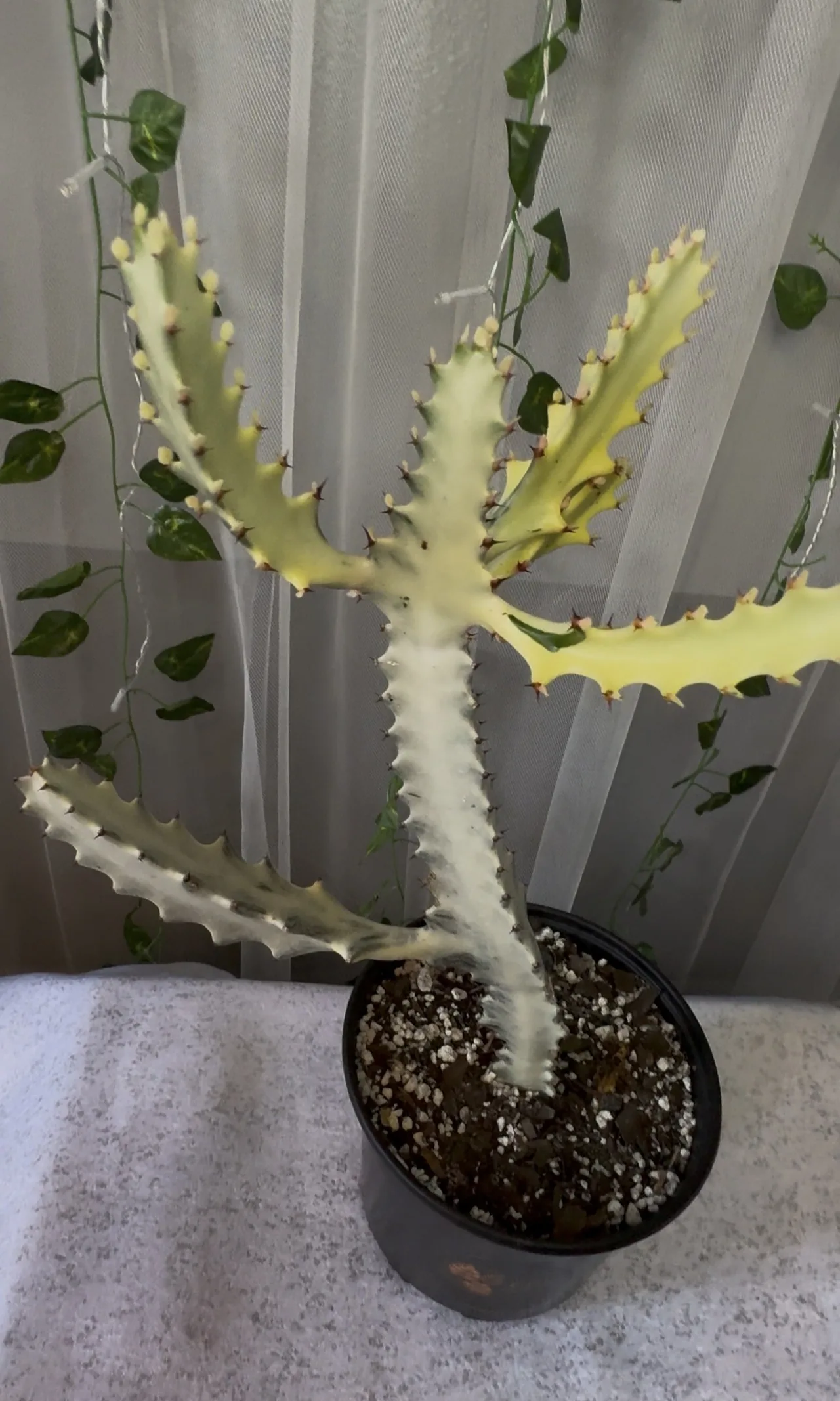
Almost every problem people have with Euphorbia lactea 'White Ghost' comes from one misunderstanding. It looks like a cactus, so people treat it like a desert plant and put it in blazing sun. But it is white because it has almost no chlorophyll, and a plant with almost no chlorophyll has almost no sunscreen. Get that one idea right and the rest is easy.
Light: bright, but earn it slowly
White Ghost wants bright light, and it will hold its shape and colour best near a sunny window. What it will not tolerate is being moved abruptly from a shaded shop into full afternoon sun.
Because it lacks the pigment that protects green tissue, direct sun on unacclimatised skin scorches it, and the scorch marks are permanent. Move it toward brighter light over two or three weeks, an hour more each few days. If you see tan or brown patches appearing, pull it back immediately.
Water: the thing that actually kills them
Overwatering kills far more of these than neglect ever will. Let the soil dry out completely, then water deeply until it runs from the drainage hole, then leave it alone until it is bone dry again.
In winter, when growth stops, cut back hard. Once a month is often plenty. A White Ghost sitting in damp soil in a cold room in January is a plant that is already rotting, it just does not know it yet.
Soil and pot
Gritty, sharp, fast-draining cactus mix. If you can squeeze a handful of your soil and it holds together in a damp clump, it is wrong. Cut it with perlite, pumice or coarse sand until it falls apart.
A drainage hole is not optional. Neither is a pot that is not wildly oversized: a big pot holds a big volume of wet soil around a small root system, which is exactly the condition rot wants.
The sap: please take this seriously
Every euphorbia bleeds a milky white latex when it is cut or broken. It is not like aloe. It is a genuine irritant that causes burning skin, and if it gets in your eyes it can cause severe pain and, in bad cases, real damage. It is toxic to cats and dogs.
Wear gloves when you repot or prune. Do not touch your face. Wash your hands afterwards even if you wore gloves. Keep the plant somewhere pets cannot chew it. This is the one part of growing euphorbias where being casual is a bad idea.
What good health looks like
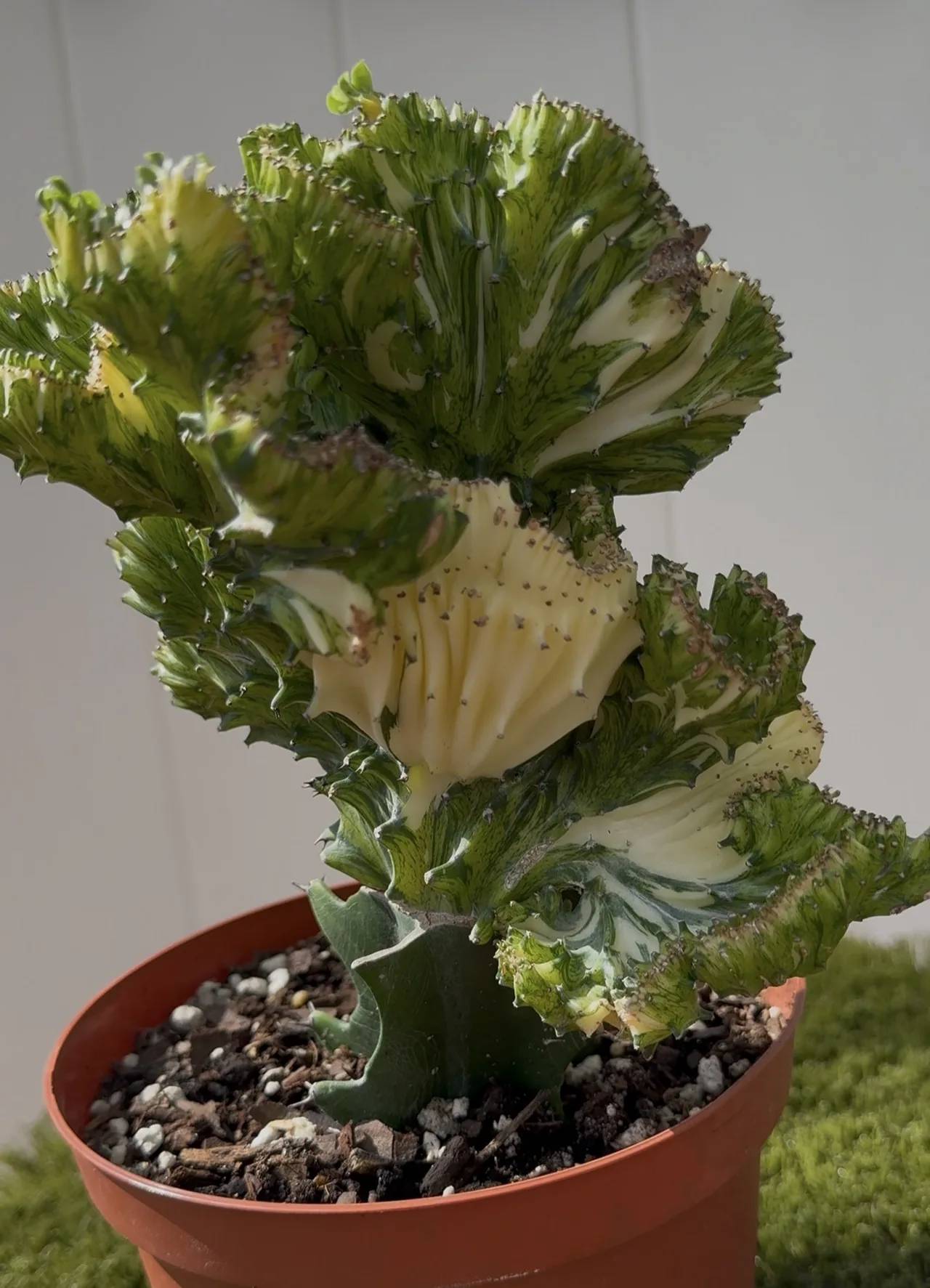
Firm, upright columns. Crisp ridges. A clean bone-white to pale cream colour with fine green marbling at the growth points. Slow growth is normal and expected, and a plant that suddenly puts on a lot of soft growth is usually reaching for light it is not getting.
Soft, yellowing or mushy tissue at the base means rot, and it means act now: cut well above the damage with a clean blade, let the cutting callus for a week, and re-root it in dry grit.